Holly's Homestead — Soil & Compost
Mulching
Protect and feed the soil with a surface layer
DIFFICULTY Easy
TYPE Ongoing practice
TIME 20–40 min per bed
TYPE Ongoing practice
TIME 20–40 min per bed
Difficulty
Easy
Time
20–40 min/bed
Cost
Low–free
Best Season
Year-round, especially before summer/winter extremes
Frequency
Topped up 2–4 times a year
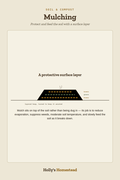
01A protective surface layer
Mulch sits on top of the soil rather than being dug in — its job is to reduce evaporation, suppress weeds, moderate soil temperature, and slowly feed the soil as it breaks down.
02What you'll need
- Mulch material — straw, sugar cane, wood chip, or leaf litter depending on the bed
- A rake to spread it evenly
- Enough volume to achieve a decent depth (a thin layer does little)
03Method
- 1. Weed and water the bed thoroughly before mulching.
- 2. Spread mulch 5–10cm deep, keeping it clear of direct contact with stems and trunks.
- 3. Water again after applying — this helps settle the mulch and start the moisture-retention benefit immediately.
- 4. Top up as it breaks down or thins, typically a few times a year.
- 5. Choose mulch type to suit the bed — fine mulch for veggie beds, coarser wood chip for pathways and around trees.
04Troubleshooting
- Mulch causing collar rot — piled against stems or trunks; always leave a small gap around the base.
- Nitrogen drawdown — fresh woody mulch can temporarily tie up nitrogen as it breaks down; use aged mulch around hungry vegetables, or add extra nitrogen.
- Mulch blowing or washing away — too light a material for an exposed site; choose a heavier mulch or water it in well.
- Slugs and snails sheltering in mulch — a minor trade-off; monitor and manage if it becomes a problem.
05Timing & maintenance
Best time
Before the heat of summer (moisture retention) and again before winter (temperature buffering) in most zones.
Duration
A single application lasts several months before needing a top-up.
Maintenance
Top up 2–4 times a year as it breaks down and thins.
Signs of success
Soil beneath stays visibly moister for longer between waterings, and weed pressure drops noticeably.
06Tips & variations
Pairs well with
No-Dig GardeningBuilding Healthy SoilCommon mistakes
Piling mulch directly against plant stems or trunksApplying too thin a layer to make any differencePro tip
Well-rotted mulch that's already partly broken down feeds the soil faster than fresh material, which needs more time to decompose.