Holly's Homestead — Subtropical Fruit Tree
Pawpaw
Carica papaya · Papaya family
DIFFICULTY Moderate
TYPE Fast-growing perennial tree, short-lived (4–5 years)
MATURITY 9–12 months to first fruit
TYPE Fast-growing perennial tree, short-lived (4–5 years)
MATURITY 9–12 months to first fruit
Sun
Full sun, sheltered
Water
Regular, well-drained — dislikes wet feet
Soil pH
6.0–6.5
Spacing
2–3m
Depth
as per pot
01Fast but short-lived
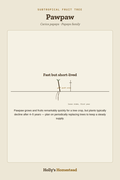
Pawpaw grows and fruits remarkably quickly for a tree crop, but plants typically decline after 4–5 years — plan on periodically replacing trees to keep a steady supply.
02Planting
Method
Plant seedlings, several together if seed-grown, since sex isn't apparent until flowering.
Soil
Free-draining above all — very sensitive to waterlogging.
Timing
Plant in spring in warm, frost-free zones.
Planting timing varies significantly by Australian climate zone. Set your zone above (or use the Find My Climate Zone tool) for guidance tailored to your own area.
03Growing care
- Ensure sharp drainage — root rot is the main risk.
- Water regularly but never let it sit wet.
- Feed generously — a fast-growing, heavy feeder.
- Stake young trees in windy spots; they can be top-heavy.
04Problems
- Root rot — from poor drainage; the single biggest risk.
- Fruit fly — net or bag developing fruit.
- Ringspot virus — mottled leaves, distorted fruit; remove affected plants.
- Frost damage — kills young plants; only suited to frost-free zones.
05Harvest & storage
Signs
Skin begins to yellow from the blossom end.
Method
Cut with a short stem attached; sap can irritate skin.
Curing
Ripen at room temperature over several days.
Storage
Ripe fruit in the fridge, a few days.
Preserving
See Freezing Produce (freezing a harvest surplus) or Dehydrating (dried tropical fruit) for ways to keep a harvest surplus.
06Companions & rotation
Plant nearby
Native groundcoversAvoid nearby
Poorly drained spotsRotation note
Not applicable — short-lived perennial, replace every few years.