Holly's Homestead — Legume
Chickpeas
Cicer arietinum · Legume family
DIFFICULTY Easy
TYPE Annual, direct sown, warm season
MATURITY 90–110 days
TYPE Annual, direct sown, warm season
MATURITY 90–110 days
Sun
Full sun
Water
Low–moderate, drought-tolerant once established
Soil pH
6.0–7.5
Spacing
15cm × 40cm
Depth
3–4cm
01Nitrogen fixers
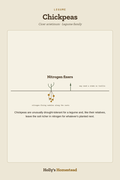
Chickpeas are unusually drought-tolerant for a legume and, like their relatives, leave the soil richer in nitrogen for whatever's planted next.
02Planting
Method
Direct sow once soil has warmed.
Soil
Well-drained; tolerates poorer soil than most legumes.
Timing
Sow in spring after frost risk passes.
Planting timing varies significantly by Australian climate zone. Set your zone above (or use the Find My Climate Zone tool) for guidance tailored to your own area.
03Growing care
- Water while establishing; ease off once plants are growing well.
- Avoid overhead watering, which encourages fungal issues.
- Weed while young — plants are slow to cover the ground.
- Leave roots in place after harvest for the nitrogen benefit.
04Problems
- Botrytis/fungal rot — humid, wet conditions; avoid overhead watering.
- Pod borer — larvae in developing pods; monitor and hand-pick.
- Poor pod fill — waterlogging; ensure good drainage.
- Few pests otherwise — a relatively trouble-free crop.
05Harvest & storage
Signs
Pods dry and rattle, plants yellow and die back.
Method
Pull whole plants once fully dry, then thresh pods.
Curing
Dry thoroughly on the plant or spread out after pulling.
Storage
Airtight, cool, dark — keeps a year or more dried.
Preserving
See Canning & Bottling (canning cooked beans) if you want them ready-to-eat on the shelf, beyond the dry storage above.
06Companions & rotation
Plant nearby
CornCucumberAvoid nearby
OnionGarlicRotation note
Excellent precursor to heavy feeders; avoid following other legumes.