Holly's Homestead — Grain & Staple
Amaranth
Amaranthus spp. · Amaranth family
DIFFICULTY Easy
TYPE Annual, direct sown, warm season
MATURITY 90–120 days for grain; leaves usable earlier
TYPE Annual, direct sown, warm season
MATURITY 90–120 days for grain; leaves usable earlier
Sun
Full sun
Water
Low–moderate, drought-tolerant
Soil pH
6.0–7.5
Spacing
20–30cm
Depth
0.5cm
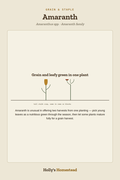
01Grain and leafy green in one plant
Amaranth is unusual in offering two harvests from one planting — pick young leaves as a nutritious green through the season, then let some plants mature fully for a grain harvest.
02Planting
Method
Direct sow, surface sown, needs light to germinate.
Soil
Tolerant of poor soil; free-draining preferred.
Timing
Sow after frost risk passes.
Planting timing varies significantly by Australian climate zone. Set your zone above (or use the Find My Climate Zone tool) for guidance tailored to your own area.
03Growing care
- Thin as seedlings establish if grown densely for leaf.
- Water while establishing, then rely mostly on rainfall — quite drought-tolerant.
- Harvest leaves regularly from a portion of the crop.
- Let remaining plants mature fully for a grain harvest.
04Problems
- Very few pests — a hardy, easy crop.
- Bird competition for grain — net maturing seed heads if harvesting for yourself.
- Self-seeding beyond bounds — harvest before full seed drop if containment matters.
- Waterlogging — ensure reasonable drainage.
05Harvest & storage
Signs
For grain: seed heads dry and seeds fall easily when rubbed. For leaf: pick young, tender leaves anytime.
Method
For grain: bend heads over a container and rub to release seed.
Curing
Dry seed thoroughly before storing.
Storage
Grain: airtight, cool, dark, many months. Leaves: fridge a few days.
Preserving
See Dehydrating (drying grains fully for storage) for ways to keep a harvest surplus.
06Companions & rotation
Plant nearby
CornBeansAvoid nearby
None majorRotation note
Rotate loosely; not a heavy feeder.