Holly's Homestead — Brassica
Brussels Sprouts
Brassica oleracea var. gemmifera · Brassica family
DIFFICULTY Moderate–hard
TYPE Annual, seedling
MATURITY 90–120 days
TYPE Annual, seedling
MATURITY 90–120 days
Sun
Full sun
Water
Consistent, deep
Soil pH
6.0–7.0
Spacing
60–75cm
Depth
as per seedling
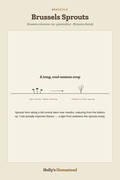
01A long, cool-season crop
Sprouts form along a tall central stem over months, maturing from the bottom up. Cold actually improves flavour — a light frost sweetens the sprouts nicely.
02Planting
Method
Transplant seedlings, staked in exposed spots as they grow tall.
Soil
Rich, firm, well-drained.
Timing
Plant in late summer to early autumn for a winter harvest in most zones.
Planting timing varies significantly by Australian climate zone. Set your zone above (or use the Find My Climate Zone tool) for guidance tailored to your own area.
03Growing care
- Firm soil well at planting — loose soil produces loose, open sprouts.
- Stake tall plants in windy positions.
- Remove yellowing lower leaves as the plant matures.
- Pick sprouts from the bottom up as they firm.
04Problems
- Cabbage moth — net or hand-pick.
- Aphids — cluster under leaves and between sprouts; hose off.
- Loose, open sprouts — loose soil or too much nitrogen; firm soil well.
- Clubroot — rotate beds, keep pH up.
05Harvest & storage
Signs
Sprouts are firm and tight, walnut-sized, starting from the base.
Method
Snap or cut sprouts individually from the bottom up.
Curing
None needed.
Storage
Fridge crisper, 1–2 weeks; can also stay on the stalk in cold weather.
Preserving
See Fermenting (sauerkraut and fermented brassicas) or Freezing Produce (blanching and freezing a glut) for ways to keep a harvest surplus.
06Companions & rotation
Plant nearby
OnionCeleryBeansAvoid nearby
TomatoStrawberryRotation note
Rotate brassicas on a 3–4 year cycle.